Mengapakah CBN Turning Berprestasi Lebih Baik?
Ya, sisipan CBN boleh digunakan pada mesin pelarik CNC standard, tetapi penting untuk memastikan mesin mempunyai keupayaan ketegaran dan kelajuan yang mencukupi. Kelajuan pemotongan yang tinggi biasanya diperlukan untuk memaksimumkan prestasi CBN, jadi mesin dengan kelajuan gelendong maksimum sekurang-kurangnya 3000 rpm adalah disyorkan.
S3: Bagaimanakah kos sisipan CBN berbanding sisipan karbida?
Walaupun sisipan CBN mempunyai kos permulaan yang lebih tinggi (biasanya 5-10 kali ganda daripada karbida), jangka hayat alat yang lebih panjang dan masa henti yang lebih singkat sering mengakibatkan kos setiap bahagian yang lebih rendah. Dalam banyak kes, kos pemesinan keseluruhan boleh dikurangkan sebanyak 20-30%.
S4: Adakah sisipan CBN sesuai untuk pemotongan terputus?
Sisipan CBN tersedia dalam pelbagai gred dan geometri. Untuk pemotongan terputus, sebaiknya gunakan gred yang lebih kukuh dengan tepi yang diperkukuh. Pasukan teknikal kami boleh mengesyorkan gred yang sesuai berdasarkan aplikasi khusus anda.
S5: Bagaimanakah saya memilih gred sisipan CBN yang betul untuk permohonan saya?
Pemilihan bergantung pada kekerasan bahan, jenis operasi (berterusan atau terganggu), dan kemasan permukaan yang diingini. Sebagai garis panduan umum, gred kandungan CBN yang lebih rendah adalah lebih baik untuk pemotongan berterusan, manakala gred kandungan yang lebih tinggi menawarkan ketahanan untuk pemotongan terganggu. Berunding dengan pakar teknikal dari NANTONG LUCUBRATE MACHINERY TECHNICAL LTD. boleh membantu anda mengoptimumkan pilihan anda.
Kesimpulan dan Seruan untuk Bertindak
Sisipan pemusing CBN menawarkan penyelesaian yang terbukti untuk cabaran pemusingan keras, memberikan jangka hayat alat yang lebih lama, kemasan permukaan yang unggul dan produktiviti yang lebih baik. Dengan memilih sisipan CBN daripada NANTONG LUCUBRATE MACHINERY TECHNICAL LTD., anda boleh memperoleh kelebihan daya saing dalam operasi pembuatan anda. Untuk mengetahui lebih lanjut tentang bagaimana sisipan CBN boleh mengubah proses pemusingan keras anda, muat turun kertas putih teknikal kami atau hubungi jurutera jualan kami untuk rundingan peribadi. Jangan biarkan haus alat dan masa henti menghalang anda—rangkul kuasa sisipan pemusing CBN hari ini.
CBN Turning Inserts: The Solution
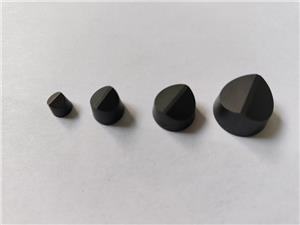
CBN turning inserts are specifically designed to address these pain points. Cubic boron nitride is the second hardest material after diamond, with excellent thermal stability and chemical inertness. These properties make CBN inserts ideal for machining hardened ferrous materials. Let's see how they solve each pain point.
1. Extended Tool Life and Reduced Downtime
CBN inserts exhibit exceptional wear resistance, often lasting 10 to 50 times longer than carbide inserts in hard turning applications. For example, when turning a 62 HRC die steel, a CBN insert might achieve 120 minutes of tool life compared to 10 minutes with carbide. This dramatic reduction in tool changes minimizes downtime and labor costs. Additionally, the consistent wear pattern of CBN inserts ensures predictable tool life, allowing for scheduled tool changes and uninterrupted production runs.
2. Superior Surface Finish and Accuracy
The high hardness and sharp edge of CBN inserts enable clean shearing of the material, resulting in superior surface finishes (Ra values as low as 0.2 µm) and tight dimensional tolerances. The wear resistance of CBN also means that the cutting edge remains sharp for longer, maintaining consistent part quality throughout the tool life. This often eliminates the need for secondary grinding, saving both time and cost.
3. Improved Productivity and Cost Efficiency
With CBN inserts, manufacturers can significantly increase cutting speeds and feeds while maintaining tool life. This leads to shorter cycle times and higher throughput. The reduced need for tool changes and secondary operations further lowers the cost per part. In many cases, the overall machining cost can be reduced by 20-30% despite the higher initial cost of CBN inserts. The table below compares the performance of CBN inserts versus carbide inserts in a typical hard turning application.
| Parameter | Carbide Insert | CBN Insert |
|---|---|---|
| Tool Life (minutes) | 10-15 | 100-150 |
| Surface Finish (Ra µm) | 0.8-1.2 | 0.2-0.4 |
| Cutting Speed (m/min) | 80-120 | 150-250 |
| Cost per Part (USD) | 15 | 10 |
Customer Success Stories
Many manufacturers have experienced the benefits of CBN turning inserts firsthand. Here are a few success stories from around the world.
Case 1: Automotive Transmission Shafts in Germany
Müller Automotive, a Tier 1 supplier in Stuttgart, Germany, was struggling with high tool wear when turning hardened transmission shafts (58-62 HRC). Using carbide inserts, they achieved only 12 minutes of tool life, leading to frequent tool changes and production delays. After switching to CBN inserts from NANTONG LUCUBRATE MACHINERY TECHNICAL LTD., tool life increased to 110 minutes, and surface finish improved from Ra 1.0 µm to Ra 0.3 µm. The scrap rate dropped from 5% to 0.5%, saving approximately €200,000 annually. "The CBN inserts have revolutionized our hard turning process. We no longer worry about tool changes mid-batch, and the quality is consistently excellent," said Hans Schmidt, Production Manager.
Case 2: Bearing Rings in the United States
Precision Bearing Corp. in Ohio, USA, manufactures large bearing rings from hardened 52100 steel (60-64 HRC). They faced challenges with poor surface finish and high tool consumption. With CBN inserts, they achieved a surface finish of Ra 0.2 µm, eliminating the need for grinding. Tool life increased from 8 minutes to 90 minutes, reducing tool costs by 40%. "Our cycle time was cut by 30%, and we've seen a significant reduction in downtime. The CBN inserts are a game-changer," remarked Emily Johnson, Manufacturing Engineer.
Case 3: Hydraulic Components in Japan
Tanaka Hydraulics in Osaka, Japan, produces hardened hydraulic cylinders (55-60 HRC). They were using ceramic inserts but faced inconsistent tool life and frequent breakages. After adopting CBN inserts, tool life became predictable at 100 minutes, and breakages were eliminated. The surface finish improved, reducing the need for honing. "The reliability of CBN inserts has allowed us to automate our turning process, reducing labor costs by 20%," said Kenji Tanaka, President.
Case 4: Aerospace Actuator Parts in France
AéroTech Solutions in Toulouse, France, machines hardened stainless steel actuator parts (50-55 HRC). With carbide inserts, they achieved only 15 minutes of tool life and struggled with burr formation. CBN inserts extended tool life to 120 minutes and eliminated burrs, reducing deburring time by 50%. "The CBN inserts have improved our part quality and reduced our lead times. We now meet our delivery schedules with confidence," noted Pierre Dubois, Operations Manager.
Applications and Partnerships
CBN turning inserts are widely used in industries such as automotive, aerospace, bearings, hydraulics, and模具 manufacturing. They are ideal for turning hardened steels, cast irons, and superalloys. NANTONG LUCUBRATE MACHINERY TECHNICAL LTD. has established partnerships with leading distributors and manufacturers worldwide. For instance, we supply CBN inserts to a major European automotive supplier and have collaborated with a US-based aerospace company to develop custom inserts for their specific applications. Our commitment to quality and innovation has made us a trusted partner for many procurement managers seeking reliable hard turning solutions.
FAQ
Q1: What materials are CBN turning inserts best suited for?
CBN inserts are ideal for machining hardened ferrous materials with hardness above 45 HRC, such as hardened steels, tool steels, bearing steels, and cast irons. They are also effective on some superalloys like Inconel and Stellite.
Q2: Can CBN inserts be used on standard CNC lathes?
Yes, CBN inserts can be used on standard CNC lathes, but it's important to ensure the machine has sufficient rigidity and speed capabilities. High cutting speeds are typically required to maximize CBN performance, so a machine with a maximum spindle speed of at least 3000 rpm is recommended.
Q3: How do CBN inserts compare in cost to carbide inserts?
While CBN inserts have a higher initial cost (typically 5-10 times that of carbide), their extended tool life and reduced downtime often result in a lower cost per part. In many cases, the overall machining cost can be reduced by 20-30%.
Q4: Are CBN inserts suitable for interrupted cutting?
CBN inserts are available in different grades and geometries. For interrupted cutting, it's best to use tougher grades with reinforced edges. Our technical team can recommend the appropriate grade based on your specific application.
Q5: How do I choose the right CBN insert grade for my application?
The selection depends on the material hardness, type of operation (continuous or interrupted), and desired surface finish. As a general guideline, lower CBN content grades are better for continuous cutting, while higher content grades offer toughness for interrupted cuts. Consulting with a technical expert from NANTONG LUCUBRATE MACHINERY TECHNICAL LTD. can help you optimize your choice.
Conclusion and Call to Action
CBN turning inserts offer a proven solution to the challenges of hard turning, delivering longer tool life, superior surface finish, and improved productivity. By choosing CBN inserts from NANTONG LUCUBRATE MACHINERY TECHNICAL LTD., you can gain a competitive edge in your manufacturing operations. To learn more about how CBN inserts can transform your hard turning processes, download our technical white paper or contact our sales engineers for a personalized consultation. Don't let tool wear and downtime hold you back—embrace the power of CBN turning inserts today.
S2: Bolehkah sisipan CBN digunakan pada mesin pelarik CNC standard?